






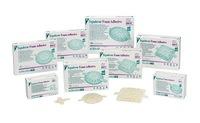
3M™ Tegaderm™ High Performance Foam Adhesive Dressing
3M™ Tegaderm™ High Performance Foam Adhesive Dressing helps meet the challenges of low- to high-exudating wounds.

Solventum
3M Health Care is now Solventum, a health care company built from a legacy of innovation and dedicated to enabling better, smarter, safer health care to improve lives.
Benefits
• Innovative layer technology absorbs and evaporates moisture to maintain an optimal wound healing environment
• Unique multi-layer design provides high absorbency with high breathability to reduce the risk of maceration
• Adapts to changing levels of exudate to maintain moisture balance for optimal wound healing
• Film backing prevents strikethrough and protects against external bacteria and viruses
• The mini-wrap provides easy application for difficult body contours such as fingers and toes
Indications
Tegaderm™ High Performance Foam Adhesive dressings are designed to allow easy, one-handed application to difficult body contours, including heels and elbows, without the need for cutting. The dressing is indicated for use as a primary or secondary dressing for low- to highly exuding partial and full thickness wounds such as pressure ulcers, venous leg ulcers, neuropathic ulcers, arterial ulcers, skin tears, surgical wounds and abrasions. The dressing is suitable for use under compression therapy. Tegaderm™ Foam Adhesive dressing is not intended for use in pressure reduction or as a surgical sponge.
Warnings and Precautions
Do not use Tegaderm™ High Performance Foam Adhesive Dressing in combination with oxidizing agents such as hydrogen peroxide or hypochlorite solution. These solutions may affect the structure and performance of the polyurethane foam.
At the time of dressing change, if the dressing is adhered to the wound surface, saturate with normal saline and gently loosen.
Tegaderm™ High Performance Foam Adhesive Dressings may be used on infected wounds under the care of a health care professional. If the wound does not begin to show signs of healing or if any other unexpected symptoms occur, consult a health care professional.
Storage Requirements
This product should be stored at room temperature. Avoid excessive heat or humidity.
Do not use if expired or if expiration date is missing or illegible.
Dispose of product per facility protocols.
How Supplied/Sizing
Square: 3½"x3½", 5⅝"x5⅝". Oval: 4"x4½", 5⅝"x6⅛", 7½"x8¾". Mini oval: 2¾"x3". Heel/elbow: 5½"x5½". Mini wrap: 2¾"x2¾".
Product features
Adhesive border
Antimicrobial format available
Compatible w/ topicals
Cuttable
Flexible
Intact when saturated
Moisture vapor permeable
Odor-reducing
One-piece removal
Pressure redistribution
Secondary dressing required
Self-adhering
Silicone-based adhesive
Surfactant impregnated
Usable on infected wounds
Variety of sizes
Other features
Educational Material Available
Free Samples/Trials Available
Published Clinical Article Available
Recommended Use
Abrasions
Arterial Ulcers/Ischemic Ulcers
Moderate/Highly Exudating Wounds
Neuropathic Ulcers/Diabetic Foot Ulcers
Non/Minimally Exudating Wounds
Partial and Full-Thickness Dermal Wounds including:
Pressure Ulcers/Injuries
Skin Tears
Surgical Wounds
Traumatic Wounds
Venous Leg Ulcers
Mode of Use/Application
Note: Follow facility guidelines for infection control policies and procedures.
Apply to clean, dry skin. Hold the dressing by one of the side tabs, remove the white liner and position the dressing over the wound. Gently press the dressing to the skin. Avoid stretching the dressing or the skin. Beginning at the center of the dressing, grasp the white paper delivery system one section at a time and remove by pulling toward the outer edge of the dressing. Press dressing to conform to the skin.
Heel/Elbow Application
Hold the dressing by one of the side tabs and remove the printed liner, exposing the adhesive border. While stabilizing the leg or surrounding tissue with one hand, position the dressing over the wound. With one hand, press or “cup” the dressing onto the skin. Continue to press and conform the dressing and adhesive border onto the skin. Beginning at the center of the dressing, grasp one section of the paper carrier and pull toward the outer edge of the dressing. Repeat this for each of the remaining carrier sections until all paper carrier is removed. Firmly press and conform the adhesive border to the skin.
Removal & Change Frequency
Observe the dressing frequently. As the dressing absorbs, exudate will wick to the top of the dressing, and discoloration may be noticeable. When the exudate spreads to the edges of the dressing or the dressing begins to leak, a dressing change is indicated.
Dressing change frequency will depend on the type of wound, volume of exudate, and clinical situation. Change at least every seven days, or as indicated per treatment protocol.
To remove dressing, carefully lift the edge of the dressing from the skin. If the dressing is adhered to the wound surface, saturate with normal saline and gently loosen. Continue lifting until dressing is free from the skin surface and remove.
Avoid forceful removal of the dressing to minimize disruption of the wound bed.
Instructions for Use
Click here to view the Instructions for Use for 3M™ Tegaderm™ High Performance Foam Adhesive Dressing.
No posters match your selected filters. Remove some filtres, or reset them and start again.
Related Products

UrgoClean AgUrgo Medical North America

Biatain® Silicone FitColoplast Corp.

PolyMem WIC® Silver Cavity FillerFerris Mfg. Corp.

Shapes by PolyMem® Sacral Silver DressingFerris Mfg. Corp.


Have a product to submit?
Be included in the most comprehensive wound care products directory
and online database.
Learn More