






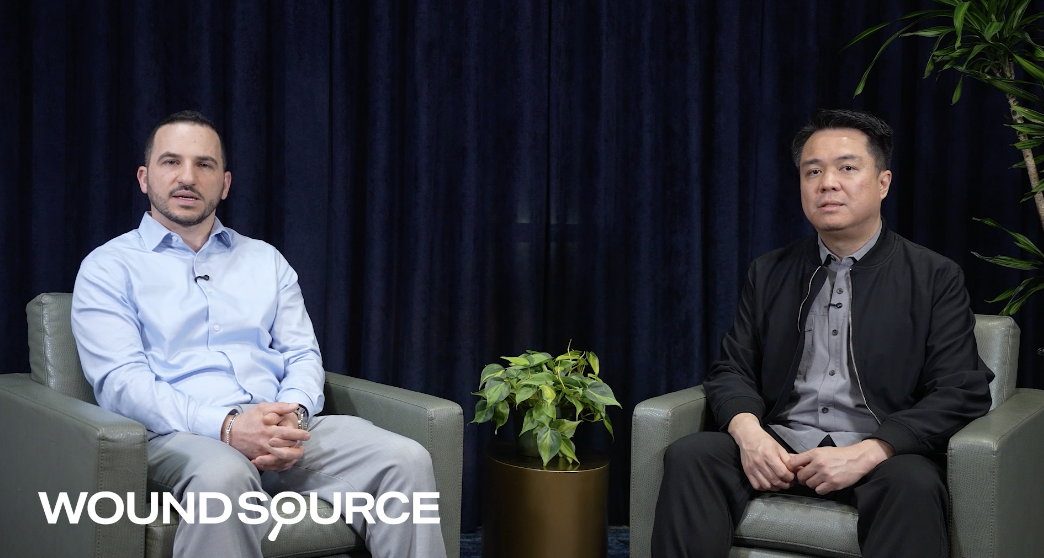
Beyond the Surface: Collaborative Approaches to Skin Integrity
June 17, 2026
Keywords
Categories
Key Takeaways
- Early recognition of subtle skin changes can prevent serious complications.
Minor skin findings—such as temperature differences, rashes, moisture-related damage, or discoloration—may signal underlying clinical deterioration in hospitalized patients. A structured assessment approach helps clinicians identify and address these changes before they progress into more severe skin injuries or systemic complications. - Collaboration between bedside nurses and wound care specialists improves patient outcomes.
Progressive care nurses and certified wound, ostomy, and continence nurses (CWONs) bring complementary expertise to skin assessment and management. By working together, clinicians can improve diagnostic accuracy, initiate appropriate interventions earlier, and enhance overall skin integrity preservation. - A collaborative, case-based care model supports education, efficiency, and cost savings.
Consulting wound care experts when uncertain about skin findings creates valuable opportunities for mentorship and knowledge sharing. This team-based approach can lead to earlier treatment, reduced length of stay, avoidance of higher-acuity care, and more cost-effective management while improving patient-centered outcomes.
Transcript
Please note: This content is a direct transcript, capturing the authentic conversation without edits. Some language may reflect the flow of live discussion rather than polished text.
Fortunato Catanzaro, MSN, RN, NEA-BC, PCCN: So my name's Fortunato Catanzaro. I'm a clinical nurse in an adult telemetry unit going on 10 years. I have my master's and I have my professional certification in progressive care.
Alex Aningalan, DNP, RN, CWON, NEA-BC, CPHQ: I'm Alex Aningalan. I'm a program manager for Women Ostomy Care at New York Presbyterian.
Fortunato Catanzaro, MSN, RN, NEA-BC, PCCN: When it comes to little findings, patients that are in the hospital, they have a lot of physiological instability with either acute CHF or sepsis or other metabolic instabilities and little skin changes, any sort of rashes or temperature differences in the skin can be very easily overlooked by bedside clinicians as just a simple change. But sometimes those kind of things can indicate a serious problem that's starting to happen. And if we help the nurses with a system-based approach to assessment, we can hopefully nick those before they turn into something more serious.
Alex Aningalan, DNP, RN, CWON, NEA-BC, CPHQ: As a specialized wound care clinicians, there are subtle skin changes that may not be easily recognizable by our clinical nurses. So we provide support in that things such as moisture associated skin damage or intertriginous dermatitis, oftentimes they may not be easily recognizable. So we provide support in assessing and identifying those two.
Fortunato Catanzaro, MSN, RN, NEA-BC, PCCN: Having a collaborative approach between the PCCN nurse and the CWON nurse can definitely help with cost savings. If we worked at the bedside together, we can pretty much learn each other's expertise. As progressive care nurses, we do have somewhat of enhanced bedside assessment skills. However, we don't have the full expertise of the skincare nurse. So working together to enhance our assessment skills can hopefully help us pinpoint those subtle skin changes. And then if we can start the treatment process early before it escalates into something else by saving on treatment costs like length of stay. Intensive care is expensive. So if we can avoid going into just a higher level of care, I think that would be a great way to improve patient outcomes and save on the cost for the hospital.
Alex Aningalan, DNP, RN, CWON, NEA-BC, CPHQ: Yeah. I really think the collaborative care model used as an approach for our patients really works because we're literally leveraging the specialties of different nurses and different clinicians to improve our patient outcomes.
Fortunato Catanzaro, MSN, RN, NEA-BC, PCCN: I feel like this would just be a very case-based approach. If I don't know what I'm necessarily looking at or any nurse, what they're looking at, it's not a matter of, oh, you don't know how to assess. It's bring in the expert. So if I can call over and say, "Hey Alex, can you come take a look at this?" Kind of like that mentoring teaching program will help us to again, improve our assessment skills going forward. So just kind of always looping in the expert and just working together on make sure you look at this next time. And so really precepting into the specialty of wound care.
Alex Aningalan, DNP, RN, CWON, NEA-BC, CPHQ: Definitely the case-based approach works in conjunction with a collaborative care model because approaching patients individually based on their individual needs while combining the specialties of our multidisciplinary team definitely would have an impact on our patients.
Fortunato Catanzaro, MSN, RN, NEA-BC, PCCN: This was just a literature review at this point, so we hope to work together to find other ways to kind of support each other's roles and improve patient outcomes in the future.
Alex Aningalan, DNP, RN, CWON, NEA-BC, CPHQ: I agree.
The views and opinions expressed in this content are solely those of the contributor, and do not represent the views of WoundSource, HMP Global, its affiliates, or subsidiary companies.


