






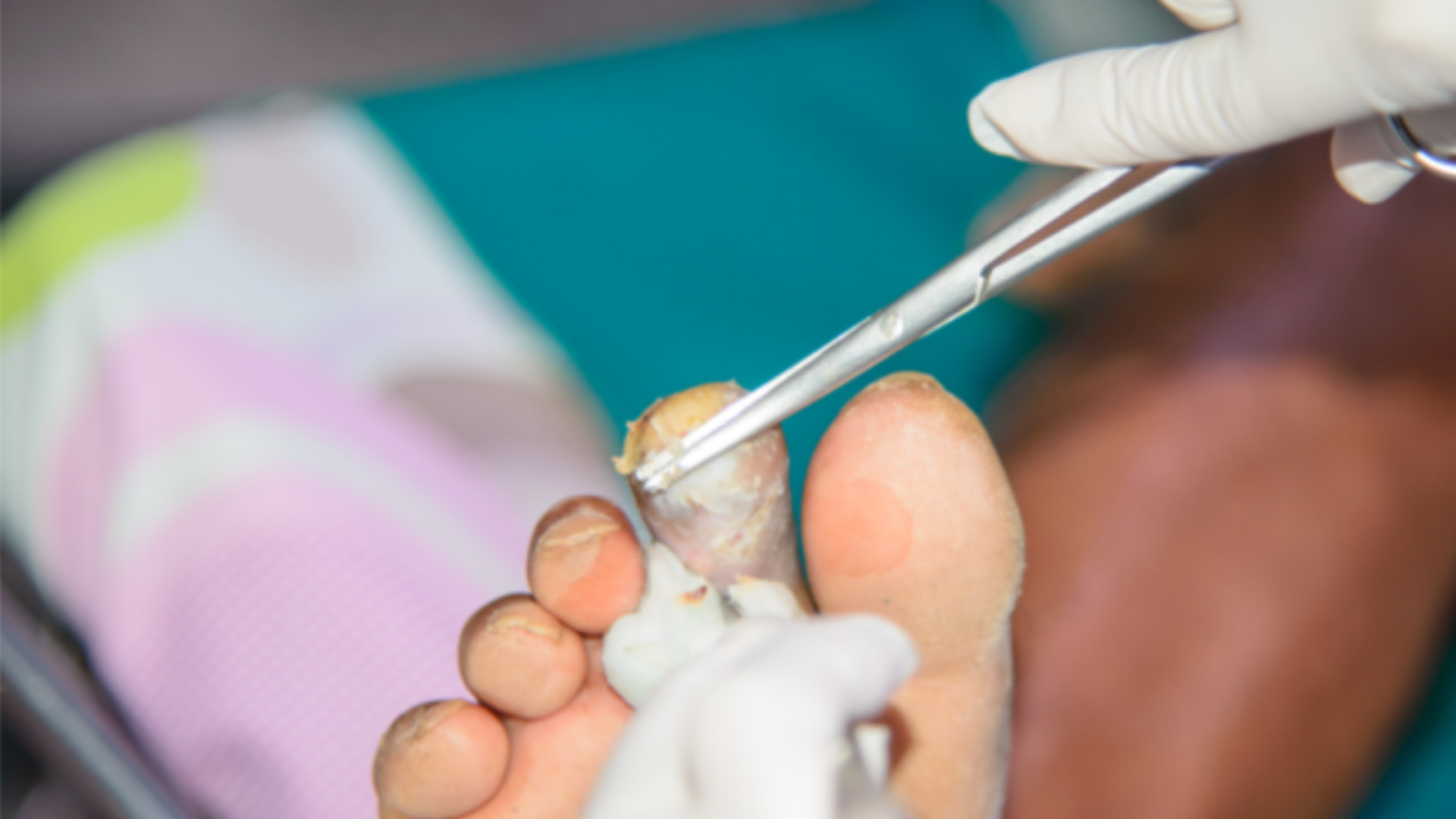
Debridement in Modern Wound Care: The Impact of Technique Selection and Timing
June 11, 2026
Keywords
Categories
Debridement remains one of the most essential—and most scrutinized—interventions in wound management, directly influencing healing progression, infection risk, and overall patient outcomes.
Why This Matters
-
Chronic wounds and biofilm-related complications continue to rise globally, making strategies such as debridement vital to patient outcomes.
-
Selecting the appropriate debridement method requires careful consideration of wound etiology, patient comorbidities, care setting, vascular status, and overall treatment goals.
-
Expanding evidence, emerging technologies, and increasing regulatory scrutiny are reshaping how clinicians approach debridement across the continuum of care.

Chronic wounds and their sequelae remain major public health concerns associated with significant morbidity, mortality, and healthcare expenditures that impact patients and strain health systems.1
As wound chronicity and complexity rise, attention has increasingly shifted toward interventions capable of improving wound bed preparation and facilitating progression through the healing cascade.
Among these interventions, debridement remains one of the most fundamental.
Debridement’s Vital Role and the Importance of Technique Selection
The importance of debridement lies in its ability to remove barriers that interfere with healing. Nonviable tissue, slough, debris, senescent cells, bacterial burden, and biofilm can all contribute to prolonged inflammation and delayed wound closure.2 By removing devitalized material from the wound surface, debridement helps create an environment more conducive to tissue repair.
The concept of wound bed preparation has evolved substantially over the past few decades, and debridement has become more than a procedural intervention—it is now widely viewed as a cornerstone of chronic wound management strategy.
Although foundational to wound care, determining the most appropriate technique is rarely straightforward. Multiple debridement methods exist, including sharp/surgical, mechanical, enzymatic, autolytic, biologic, and ultrasonic approaches, each associated with unique advantages, limitations, indications, and operational considerations.3
The decision-making process has become increasingly nuanced as clinicians balance wound characteristics with patient-specific factors and healthcare setting limitations. Factors such as vascular status, anticoagulation therapy, pain tolerance, infection risk, tissue viability, palliative goals, and clinician competency may all influence whether debridement is appropriate and method is selection.4
Care settings also play a critical role. Debridement performed in an operating room may differ significantly from approaches used in outpatient wound centers, long-term care facilities, home health environments, or bedside acute care settings. Access to resources, staffing support, equipment, reimbursement policies, and regulatory requirements can all shape clinical decision-making.5
Timing and Frequency of Debridement May Influence Healing Outcomes
Emerging evidence suggests that the timing and regularity of debridement may have meaningful implications for healing progression. Several retrospective and observational studies have associated more frequent debridement with improved healing outcomes in chronic wounds.6 While optimal frequency varies depending on wound etiology and patient factors, the broader message remains clear: wound bed preparation is not a one-time event.
At the same time, clinicians must balance the potential benefits of aggressive tissue removal against risks such as bleeding, procedural pain, tissue trauma, ischemia, and patient tolerance.7 Certain wounds—particularly ischemic or unlikely-to-heal wounds—may require more conservative approaches or avoidance of debridement altogether.
This balancing act reinforces why clinical judgment remains so important in modern wound care. Determining when to intervene, when to defer, and how aggressively to proceed with debridement requires an understanding of wound pathophysiology, patient-centered goals, and risk-benefit considerations.
Expanding Technologies and Evidence Are Reshaping Practice
Technological innovation continues to influence how clinicians approach debridement and wound bed preparation. Emerging modalities such as low-frequency ultrasonic debridement, hydrosurgical systems, monofilament fiber technologies, and biologic approaches continue to expand the range of available tools and techniques.8
Simultaneously, healthcare systems are placing increasing emphasis on evidence-based practice, quality metrics, infection prevention, and cost containment. Delayed wound healing and preventable complications can contribute to increased hospitalizations, prolonged treatment durations, and higher overall costs of care.9 As a result, healthcare organizations are seeking interventions that can improve healing efficiency while reducing variability in clinical outcomes.
Regulatory and reimbursement scrutiny has also intensified surrounding wound management procedures. Documentation expectations, coding requirements, and medical necessity standards related to debridement continue to evolve, increasing operational complexity for providers across care settings.10
These shifts underscore the growing importance of multidisciplinary education surrounding both the clinical and operational aspects of debridement practice.
Debridement Education Matters Across the Continuum of Care
Because wound care is inherently interdisciplinary, education regarding debridement principles has broad relevance across healthcare professions. Nurses, podiatrists, surgeons, physicians, advanced practice providers, physical therapists, and home health clinicians, among others, may all participate in wound assessment and wound bed preparation throughout the patient journey.
Variability in clinician training, procedural comfort, and institutional protocols can contribute to inconsistencies in practice.11 In some cases, delayed recognition of nonviable tissue or uncertainty regarding procedural appropriateness may contribute to prolonged inflammation, stalled healing, or preventable complications.
For wound management professionals, staying current on evolving debridement concepts is becoming increasingly important—not only to support clinical decision-making, but also to improve consistency, reduce complications, and optimize patient outcomes across the continuum of care.
References
-
Sen CK. Human wounds and its burden: an updated compendium of estimates. Adv Wound Care (New Rochelle). 2019;8(2):39-48. doi:10.1089/wound.2019.0946
-
Schultz GS, Sibbald RG, Falanga V, et al. Wound bed preparation: a systematic approach to wound management. Wound Repair Regen. 2003;11(suppl 1):S1-S28. doi:10.1046/j.1524-475X.11.s2.1.x
-
Steed DL. Debridement. Am J Surg. 2004;187(5A):71S-74S. doi:10.1016/S0002-9610(03)00305-1
-
Wounds International. International Best Practice Guidelines: Wound Management in Diabetic Foot Ulcers. Wounds International; 2023.
-
Agency for Healthcare Research and Quality. Care coordination measures atlas update. Published 2020. Accessed May 20, 2026. https://www.ahrq.gov
-
Wilcox JR, Carter MJ, Covington S. Frequency of debridements and time to heal: a retrospective cohort study of 312 744 wounds. JAMA Dermatol. 2013;149(9):1050-1058. doi:10.1001/jamadermatol.2013.4960
-
European Wound Management Association. Debridement: An Updated Overview and Clarification of the Principle Role of Debridement. EWMA; 2021.
-
Kim PJ, Attinger CE, Steinberg JS, et al. The impact of wound debridement and cleansing on the healing of chronic wounds. Plast Reconstr Surg. 2019;144(6S):193S-200S. doi:10.1097/PRS.0000000000006280
-
Olsson M, Järbrink K, Divakar U, et al. The humanistic and economic burden of chronic wounds: a systematic review. Wound Repair Regen. 2019;27(1):114-125. doi:10.1111/wrr.12683
-
Centers for Medicare & Medicaid Services. Local Coverage Determination (LCD): Debridement Services. Accessed May 20, 2026. https://www.cms.gov/medicare-coverage-database/view/lcd.aspx?lcdId=33614&ver=26
-
Gray TA, Rhodes S, Atkinson RA, et al. Opportunities for better value wound care: a multiservice, cross-sectional survey of complex wounds and their care in a UK community population. BMJ Open. 2018;8(3):e019440. doi:10.1136/bmjopen-2017-019440
The views and opinions expressed in this content are solely those of the contributor, and do not represent the views of WoundSource, HMP Global, its affiliates, or subsidiary companies.


