






Optimizing Integral Debridement: A Multidisciplinary Approach to Maintaining Healing Momentum
May 1, 2026
Keywords
Categories
Transcript
Alison Lachaine, MN, BScN: Hello and welcome. Today we have a conversational discussion that will explore how integral debridement works across multiple care settings. And we will share our clinical expertise on the topic as well as exciting research.
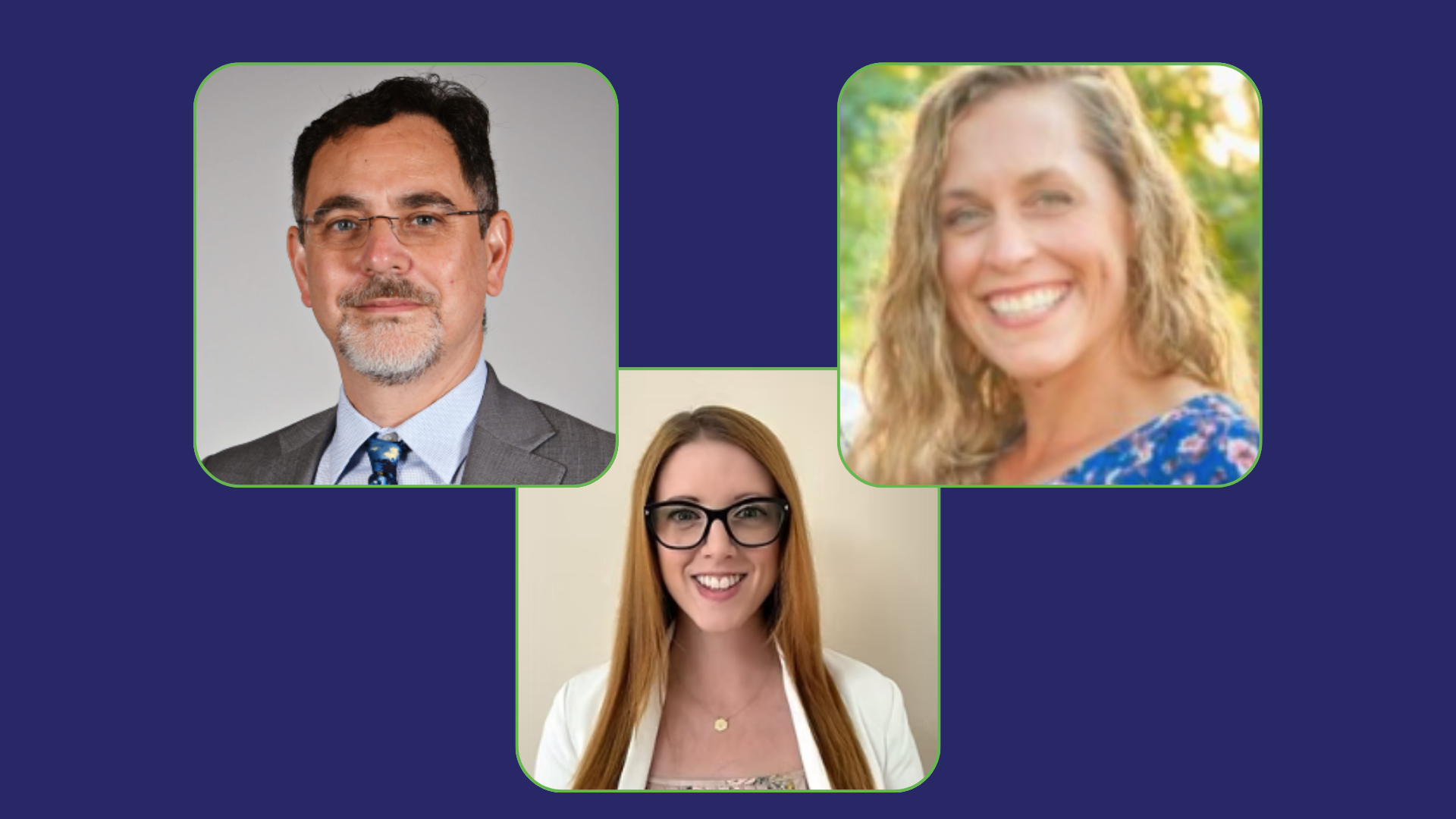
Hello, my name is Alison Lachaine. I am a clinical nurse specialist in skin, wound, ostomy, continence residing in Toronto, Canada. I take care of our provincial wound program for a home care agency. And today I am joined by two other experts in the field. Welcome. Would you please like to introduce yourself? First, Dr Litt?
Jeffrey D. Litt, MSBE, DO: Absolutely. My name is Jeff Litt. I am a burn and wound care surgeon in Richmond, Virginia at Chippenham Hospital. I have been taking care of burns and wounds post-training for about 12 years. And I'd also like to introduce our next speaker, Caitlin, if you'd like to introduce yourself to the group.
Caitlin Scarborough, BSN, RN: Thank you so much, Dr Litt. I'm Caitlin Scarborough. I'm a certified wound, ostomy, and continence nurse currently working in Minnesota. I grew up through nursing as an Army nurse, and so I've been able to travel around the world and practice as well as around the country, finally ending up back home in Minnesota, being able to experience a lot of different care settings and learn about how integral debridement has really been able to change our practice here.
Alison Lachaine, MN, BScN: Thank you so much, Dr Litt and Caitlin. So let's kick off the discussion. Our first question is, how should continuous integral debridement be defined in a way that is both clinically rigorous and operational across disciplines and care environments?
Jeffrey D. Litt, MSBE, DO: From the surgical perspective, if I can start, I obviously am a huge proponent of adequate debridement. There are many different forms of debridement. There's autolytic, there's sharp, there's mechanical, enzymatic, and biologic, along with probably a few others. Being a surgeon, sharp debridement is my bread and butter, so to speak. Although combinations of different debridement techniques are probably the most effective way. Sharp debridement is very effective at a one-point-in-time moment, but continuing that in the non-operational operating room environment in a rigorous way is always difficult. So combining a good sharp debridement and whether this is under an anesthetic with a very aggressive debridement or even in the clinic with some local debridement, nonetheless using sharp techniques, both are very effective. But combining that with enzymatic, autolytic, and other techniques really keeps the wound bed from reaccumulating that which we debride sharply.
Alison Lachaine, MN, BScN: Thank you. So in my practice, when I think of debridement or my staff think of debridement, they often go to sharp when you're speaking about in acute care. But in community, sharp's not really a readily accessible option for us. So when we think of integral debridement, really, I explain to my staff that it's a treatment strategy used after we have the sharp debridement performed. And it really helps to keep that wound bed clean and prevent the reformation of the necrotic tissues, continuing on with the patient's treatment plan.
Jeffrey D. Litt, MSBE, DO: It's not a one-and-done philosophy. It's not, “Okay, I did my sharp debridement, no more surgery plans, good luck.” It's constant vigilance to make sure that, again, reaccumulation of non-viable, necrotic, or otherwise unhealthy tissue occurs. And that is most often done more in an outpatient setting than in an inpatient or operating room setting. And that's where some of the other techniques, and whether it's an ointment-based kind of debridement technique or even a wet-to-dry or mechanical, using things like just gauze to wipe away slough, all of these are really integral to maintaining the already healthy wound bed that we've created in the sharp debridement techniques that we've used. Caitlin?
Caitlin Scarborough, BSN, RN: So we're mostly inpatient, and how I explain it to my nurses is that we're supporting the work of the practitioners. And so if I get a good sharps debridement, whether it's OR or bedside, we want to sustain that good work by making sure we're using products that are able to keep that slough from reforming, like my colleagues have repeated. And so having access to good dressings where we don't always have to rely on sharps every single time has changed a lot of the care that we've done within the hospital setting.
Alison Lachaine, MN, BScN: Thank you both. That actually leads into our next question quite easily, and it's talking about the continuum of care. What are the distinct and complementary responsibilities of each clinical role in maintaining debridement? As well, where should accountability explicitly reside, especially during the transfer of care from, say, acute to inpatient to outpatient all the way to community?
Jeffrey D. Litt, MSBE, DO: Oh, if there were only one easy answer for that. A, it's more than one question. So I guess the starting question, across the continuum of care, what are the distinct and complementary responsibilities of each clinical role? I think we have to define the role. Certainly as the surgeon, I've got a role in being maybe the most effective sharp debrider. But again, I potentially have the benefit of general anesthesia or at least, really significant anesthesia, local or otherwise, that helps with a really aggressive debridement to make sure that at that one time we get a really good healthy wound bed.
I don't abrogate responsibility once I'm done, like I suggested earlier. And we think of wound care as a team sport for sure. Burn care is certainly a huge team sport, and the surgeon is one cog in a very complicated wheel. Other wounds are just as important to have all team members focused on the goal of wound closure and epithelialization in one form or another.
And so I don't think it's quite as simple as just saying, “All right, I've done my part, now it's your turn,” and passing the baton, so to speak. It's very complementary. This is what I did in the OR. We're going to need to change these dressings in two days. This does not need to be in the operating room environment. So our bedside wound care team will be evaluating that and then getting back to us to let us know how the wound looks and if they feel that further debridement in the operating room is necessary or if bedside debridement techniques are going to be appropriate. Caitlin, do you think that's how you experience inpatient wound care?
Caitlin Scarborough, BSN, RN: Yeah, when it's an ideal setting, yes, we have a surgeon available to be able to debride. The hard part is some of the facilities that I cover are a little bit more critical access, so we don't always have surgeons or doctors available who feel comfortable with bedside debridement. So being able to have different strategies to help bridge that gap has been very, very helpful in some of these facilities. Specifically, I've been certified to debride though.my hospital system doesn't have a pathway for us to do that, so being able to use some of these dressings that still have those debridement modalities to either prep that tissue or demarcate, so it makes bedside debridement easier for my physicians or NPs or PAs. Otherwise, again, continuing the work from that original sharps debridement, especially if it's not a candidate who is great in the OR, again, it's just being able to have a bigger portfolio to meet the needs of that wound, no matter what the patient situation is.
Jeffrey D. Litt, MSBE, DO: Yeah, that's a good point. As a surgeon, I'm always available. So I often don't think of the access hospitals that don't have someone like me available. So thanks for reminding me of that.
Alison Lachaine, MN, BScN: And whereas here in the community, a majority of our clients actually reside in the rural northerm area where we have maybe one specialty for hundreds-of-kilometer radiuses. So we really focus on notification and assessment, and also patient involvement. They are seeing their wound every day. The visiting nurse might be seeing their wound and they're the ones that are realizing, “Hey, this might need some more integral debridement strategies. I can see some slough coming back up,” and then they notify the wound specialist who will come in and reassess. Without those eyes, I feel that we would lose some of the healing trajectory if we're constantly not monitoring the situation up there.
So as we move to actually transitions between different places, what are some specific tools and protocols for communication that could be used effectively to sustain the wound bed prep, when they are transferred from the OR down to the floor and then out to the community, to make sure that the orders remain consistent and the care remains the same throughout?
Jeffrey D. Litt, MSBE, DO: Well, certainly consistency is ideal and not always achievable, unfortunately, depending on the care plan that the patient is going to undergo. Certainly patients who, for instance, leave against medical advice make it very challenging to continue our healing trajectories, like you described. In our facility, the transition from the acute operative inpatient to the acute non-operative inpatient is fairly easy. We have a bedside wound care team like Caitlin runs with whom we communicate on a daily basis, including weekends. And every day we come up with a care plan for which patients need which wound care regimens and what the expectations would be.
The transition from inpatient of whatever form to outpatient, it depends on where specifically. If it's a skilled nursing facility, many of the nursing facilities who take our patients locally, at least, have had wound care nurses from their team come in and observe us and our wound care practices. And we're a very busy wound care– aside from the burns, we're a very busy wound care practice as well. And so it's probably a significant portion of their wound care patients come from our facility. And that has been helpful because questions are asked at that time that can then be passed along to the remaining staff. The transition from inpatient to home with outpatient follow-up, we try to do with patient family. We try to do a bedside change, for instance, or a bedside wound evaluation with family. This is especially true of burns, but other wound care, other wound patients, we try to make this happen. We have an underserved population that's not always possible where family is not always available. But it's attempting to get as many eyes and ears that will be helping care for the wound, see what the wound looks like at this moment in time and what our expectations in terms of wound care practices would be.
Alison Lachaine, MN, BScN: Caitlin?
Caitlin Scarborough, BSN, RN: I'll jump on this one. So coming from the OR, once we get the patient as an acute care patient, we think about, what do we need to do to maximize this wound healing before this patient gets ready to discharge? And that can change all over the board, especially if the patient is discharging sooner rather than later. But as we watch this wound heal and do different strategies to help this wound heal, we have some different modalities that we're able to use inpatient that we're not always able to use outpatient. So then we have to come up with what's our plan B? For us, some of our bigger challenges are the, we call them TCUs or transitional care or a skilled nursing facility. We know that some facilities can take on things like negative pressure therapy and some can't. So sometimes we have to switch our strategies based on that. Another issue that we have is home health care in general and being able to facilitate a certain amount of visits.
So it does get harder and harder. We know home health care doesn't usually do daily wound care. So we always have to select dressing products and wound cleansers that we know are going to be able to help maximize that woud healing but be able to handle changes every few days instead of a daily, for example. So it's really about how we can push the patient's wound towards healing as aggressively as we can while they're inpatient and then come up with an alternative strategy to meet the needs of our outpatient partners.
Alison Lachaine, MN, BScN: So where I find some of the common gaps from acute care to home care, we tend to lose a lot in communication with the referrals and we miss a little bit of that care plan. So what we've created is actually standardized care plans for specific wound types that will allow our nurses to follow a set standard, but it also gives them the ability to do a full wound assessment and then realize, “Hey, I might need a different product. It's not available, the one that was recommended.” And we highly encourage communication back towards the ordering physicians so that this can be relayed and everyone's on the same step. Because you're right, a lot of products in the hospital are not available in the community, but we need to make sure that the continuing of care is the same. So we highly, highly stress communication back to make sure that we are all on the same page and everyone is aware.
Jeffrey D. Litt, MSBE, DO: Yeah, everyone who's discharged, who we've had wound care recommendations, gets specific wound care orders from our team prior to their discharge, often several days before, and then they become reiterated both in the medical chart as well as at the bedside with the patient and other caregivers if they're present.
We try to arrange very close follow-up in our outpatient clinic. We've got our clinic Monday through Friday. And we have the option of some small clinic-based procedures as well to continue the debridement process if necessary, even application of some potential skin substitute products as well in our outpatient clinic. So keeping the patient and their caregivers engaged with close follow-up is pretty critical as well.
Alison Lachaine, MN, BScN: Because sometimes when you're thinking in regards to diabetic population and the thick and callous buildups that need to be debrided, patient involvement is really important, because they're actually the number one prevention of that callus reformation, utilizing their offloading. So it's always great to involve our patients as well in all of their care plans.
Jeffrey D. Litt, MSBE, DO: Yeah, absolutely.
Alison Lachaine, MN, BScN: That's all the time we have for today. Thank you. And I'd like to give a thank you to our guests, Dr Litt and Caitlin. This was a lively discussion on integral debridement. Please consider, viewers, sharing this video with your peers and engaging in your own conversations at work about this important topic. Thank you.
Jeffrey D. Litt, MSBE, DO: Thanks, everyone.
Caitlin Scarborough, BSN, RN: Thank you.
The views and opinions expressed in this content are solely those of the contributor, and do not represent the views of WoundSource, HMP Global, its affiliates, or subsidiary companies.


