






What is Mobile Wound Care?
February 18, 2026
Keywords
Categories
Mobile wound care is rapidly evolving into a sophisticated, multidisciplinary field delivering advanced wound medicine directly to patients in nursing homes, assisted living facilities, and home settings. This conversation explores the definition, history, and future of mobile wound care, emphasizing clinical excellence, sustainability, and patient-centered models. Learn how provider-led practices are adapting to reimbursement pressures while maintaining high-quality, compliant care.
Key Takeaways:
· Mobile wound care is best defined as wound care delivered at the patient’s location (e.g., nursing homes, homes, assisted living, rehab facilities), rather than a specific modality or provider type.
· The field has evolved from basic wound care to advanced wound medicine, with providers now expected to integrate systemic medical decision-making, perform procedures like biopsies, and manage complex comorbidities. The term “wound medicine” reflects the shift toward a holistic, multidisciplinary approach.
· Sustainability is a critical focus amid reimbursement shifts and market pressures, requiring models that balance high-quality patient outcomes with financial and operational stability.
· Effective wound care models require collaboration across diverse clinical roles and business functions. Provider-led organizations rooted in patient-centered care are better positioned for ethical and sustainable growth compared to profit-maximizing, non-clinical-led ventures.
Transcript
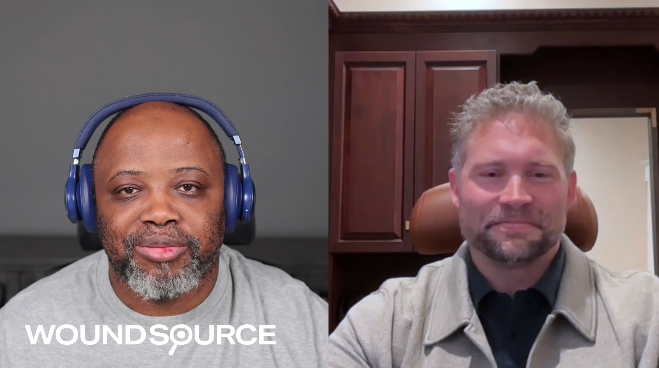
Zweli Tunyiswa: I'm excited to talk to you about a subject that I think is important in the mobile wound care space, in the wound care space in general. And that discussion is around mobile wound care: what is it, what's the history of mobile wound care, and I think a subject that's most important, what is the future of mobile wound care? So, thanks for jumping on the stream.
Ryan Dirks: Yeah, thank you for having me. It's a pleasure to be able to spend some time with a good friend and I'm sure the conversation will be interesting.
Zweli: Brilliant. Well, I think, you know, to start, it might be useful for people to know who we are. And so, my name is Zweli Tunyiswa, currently the CEO and Co-founder of Open Wound Research. Past life I was in mobile wound care, what they call it now. We used to call it post-acute consultancy, amongst many other things. I entered the field in 2011 and exited in 2022 when the company that I was a partner in was sold. And so, a lot of experience, a lot of journeys during that time, and really a great period in my life working with many administrators in nursing homes, directors of nursing clinicians, and other stakeholders.
Ryan, perhaps if you could just give a background on your side.
Ryan: Yeah. I've been a physician assistant practicing for, gosh, just over 18 years. So, I started my career very passionate about sports medicine, orthopedics. I thought for sure that's what I was gonna be doing and within, well, a short period of time after starting, I got introduced to wound care, particularly in the clinic setting, but then I was asked to go to a nursing home and see a patient that had wounds, and I said, I don't even know if I even like wound care yet, let alone, I don't know if I can handle going to a nursing home. Because I envisioned just kind of being by myself, you know? So, that was my indoctrination into going outside of the clinic walls to be able to take care of a patient.
Interestingly enough, the patient was on a ventilator and wasn't able to easily transport into the hospitals wound care center. And so I agreed to go out and see that patient. And it turns out that they had a list of 20 other patients that they wanted me to see, also on ventilators. So, funny enough my introduction to post-acute wound care was under the assumption that all patients with wounds in nursing homes were on ventilators, which there's some interesting facts and points about that, but that was kind of my first impression of the, not only the severity of the wounds, but the acuity of the patients and the challenges that the nurses had. The nurses, when I went out, were amazing. They knew more about wound care than I did. I felt a very comfortable in the orthopedic side of my practice, but way less comfortable in wound care. So, I started learning a lot from them really quickly, and what I fell in love with was being able to build teams. And that was what I did in sports medicine. You know, in sports medicine I did a lot of youth and high school sports. And what I was good at and what my mentors taught me was that you need a good team around you. You need a physical therapist that's great with knees and lower extremities, and you need a physical therapist that's good with spine and you also need a knee surgeon that, you know, families and parents will trust. Because if you send somebody to the surgeon and the parents are like, I wouldn't let this person touch my child, that's, you know, already having this really serious problem. They're not gonna want to be involved in, and that will look bad on you as kind of the primary sports medicine person.
So, in the nursing home, when I realized there were nutritionists, there was physical therapy, occupational therapy, nursing. There were wound care nurses who were certified and there were primary care doctors. And so I was kind of like, what do you guys need me for? But what I became really good at quickly was getting everybody to talk and work together.
I'm, by nature, I'm a galvanizer. I can pull people together and get everybody moving in the same direction and excited. So, that was my unique part about almost 20 years ago, was just getting everybody in this really acute setting. It wasn't an LTAC, and we'll talk about care settings today, but in Washington state, where I live, there are numerous facilities where people that are ventilator-dependent will need to stay and live and often they have wounds, and as we'll talk about, pressure ulcers today.
That was kind of my first experience taking care of those patients.
Zweli: And what year was that, when you started individually before you started United Wound Healing?
Ryan: That was probably 2008, 2009, somewhere in there.
Zweli: So technically you beat me to the space by about 3 years
Ryan: Maybe. But, you know, at that time, to be honest, I would go once a week to the nursing home. At first I had to go twice a week because there were so many residents to see, and I'd go into my day job after that. And I didn't know very much. So, I was just kind of like, I could do some things within my scope of practice that the nurses couldn't do. But for the most part, I spent the first few years just really learning a lot from the nurses. And that, so I don't know if I even really would consider, and we'll talk about, you know, the words that we use, I think the words we use are important today. I don't think I would consider myself a wound specialist at that time. I don't think I would have considered myself doing wound medicine like we do now. I think it really was wound care, like let's, you know, remove dead tissue from the wound, let's pick the right dressing, and let's get at least everybody working together. And so there was a little bit of a glimpse of kind of this holistic approach to the patient, which is now, you know, the biggest focus of my practice and our team's practices.
But, at that time I think it was very much wound-care-driven. Like, you know, let's clean up the wound and put the right bandage on it, which by the way, at that time it was a lot of things like wet-to-dry and Dakin's, and other things that we wouldn't use in our standard of care today. And that was, that was all we had.
Zweli: Yeah, it's really interesting. It was a different time, and it's changed so much, which we'll get into a little bit.
So, I think, you know, a structure that we've talked about using for our chat today is really, first starting with what is mobile wound care, thinking about what the definition is, the history I think is an important element as well, because a lot of people don't understand the long and storied history of what is now currently called mobile wound care. And I think we can drill down into that and talk about some of the early pioneers in the space, both at an individual level and at a company level. And then once we kind of set that groundwork, think about how mobile wound care has changed, particularly in the period after 2018 and post-Covid. And then maybe finish up around the idea of talking about the sustainability of mobile wound care, the future, which I think is bright but uncertain in many ways as well. So maybe let's think about what is a work as a working definition of mobile wound care in your mind?
Ryan: Man, I struggle with this one Zweli. I have heard so many different names to describe what we have done over the years. When I first started, there was really nobody. There was a surgeon who I worked with that was a mentor and he was great at what he did, but he was only one person. And so most of his time was spent in the hospital and in the wound care center. So that's kind of how I got my indoctrination. I owe him a lot. I mean, he taught me a lot, but at the time, there really wasn't anybody else. And then shortly after I started United Wound Healing and started expanding, I heard the nursing homes coming up with terms for the providers that would come in. They would call them like the debridement groups and things like that. And I was like, this is just odd. Like I'm kind of new to wound care and new to medicine in general, but why are we being called what we do? It just seems strange.
And then fast forward to the last few years, especially the last 5, this notion of mobile wound care. And I'm thinking, what does that mean? And is, are we like moving somewhere while the patient's getting their wound care? Like is it in a van? Do we pick them up and we go for a nice drive, and while we're driving we take care of their wounds? Like I've never really looked at the term mobile wound care and felt like it really describes what it is that we do.
I mean, in a nursing home now, I've been doing nursing home wound care myself, still, practicing for almost 20 years. The things, the resources that we have in the wound care environment in a nursing home are just as robust and sometimes even more robust than what I've seen in outpatient wound care centers. And people might not know that or understand that. And so when some people think of mobile wound care, they might think of, you know, a provider that stuffs a couple of, you know, scalpels and curettes in their pocket and runs out to the nursing home to come save the day or whatever. And when I was first getting started, there were some outpatient wound care centers that had what they called outreach programs. And so they would go out, and they would see some patients mainly to make sure that the correct patients could come into their wound care center. So, I don't know Zweli, I struggle with mobile wound care. How do you feel about the term, you've been involved in this as well? I'd love to hear your thoughts.
Zweli: Yeah. I think, you know, to your point, the definition is not very discreet. I think it's a working definition. It's where the providers go to the patients instead of the other way around. I think that's an important part of the definition. I think the settings that most reasonable people would agree on could be considered mobile is the nursing home, obviously, which is very popular, the home, inpatient rehab hospitals, for example, and then other domicile-like settings, like assisted living facilities, independent living facilities, adult homes, et cetera. And even things like the PACE programs, right? Where you're going to where the patients are. So, I think it's a very diverse space, but I think the key is that the providers are going to where patients are versus the other way around.
Ryan: Yeah, I'm just going back to my orthopedic world, which I did for almost 10 years as well. When I first started there was, if you look at just like joint replacements, for example, there was amajority of joint replacements, in fact, all of them that we did were in the hospital itself. You stayed overnight for a night or 2. It was, you know, it was a hospital-focused practice. Most of the joint replacement surgeons spent their time in the hospital. Then it moved to outpatient settings and ambulatory surgery centers came into the picture. And today there's even not joint replacements of course, but there's a lot of surgical procedures that are done in offices now. Look at vascular surgery and things like that. So, they didn't necessarily change the name of the specialists or what they do. They didn't divide themselves into, well, we work in the hospital, and you work in outpatient wound care centers. And, you know, they did not. They did not necessarily rename their specialty.
So, I think we're all those of us that are invested and that have taken the time to get an accredited wound care certification, I think we're all wound care specialists. We just happen to see patients in different places. But in, oftentimes, aside from hyperbaric oxygen, we pretty much deliver the same care in the different care settings. And that's the part that maybe people might not know and understand. But in the last 5 years, there's been kind of this rise of mobile wound care, and as we'll talk about in a little bit, maybe a negative connotation to mobile wound care and the people involved in it, and maybe justified. But, at the end of the day, I think we're all providing wound medicine, which is far more advanced than just wound care, that, you know, I'll just pick on myself for a minute. I think, you know, 18 years, 15 years ago, I was still very focused about being good at wound care. Now, I let the nurses be really good at wound care, and I focus on, you know, the systemic needs of the patients, the labs, the overall health of the patient, very internal-medicine-focused, but at the same time, very procedure-focused, you know, of course, debridement, biopsies of wounds. We do way more biopsies than we ever did before, and we find a lot more malignancy related to our wounds than we ever did before. And the wounds we thought were venous leg ulcers on the legs aren't. And so, our specialty has continued to evolve in a good way. And I think now what we're doing is we're focusing on our medicine skills, combining that with our surgical skills, and getting, I think, outstanding results for our patients.
Zweli: Yeah, I think you definitely have seen a maturation in the services that are being provided at the bedside. And I think it's a function of multiple things. I think early on in mobile wound care, the groups were smaller and it was hard to build, a big team. Right? And building a big team takes a lot of time, because you're going to have turnover. I think, you know, we've talked about this, but turnover at one year, in some cases is 50%, right? And so to build a big team takes time.
But I think, you know, from the early 2010s to the mid 2010s, you saw those organizations like yourself, our organization on the east coast, and many organizations across the country build that cadre of really experienced certified wound care providers, who then because they had more experience, were able to bring more things to the bedside in terms of clinical decision making, et cetera.
And then a maturation around these services and products in wound care, generally as well. So, I concur with you. I think even, you know, when I joined in 2011, the difference that I saw between 2011 and COVID in terms of the services that were available and the things that were being done at the bedside and the demands that were being born by, being brought by the market changed significantly.
Perhaps let's talk a little bit about sort of the models. Because I think it's important to talk a little bit about the different models within mobile wound care, vis-a-vis the types of providers. So, in my mind, and again, you can extrapolate from here, there was the original MD model or the surgeon model, the surgeon-only model, we'll call it. And then we had the NP/PA model, right, that sprung up as well. And then, the rise of the mixed taxonomy models where all the providers sort of were combined, et cetera. And I'm doing disservice to podiatry and of course podiatrists who, were part of teams or were doing mobile wound care as part, as an extension of their podiatric services.
What do you think about that taxonomizing that I'm kind of giving? Does that make sense?
Ryan: Yeah, we've seen it all, right? And, I think that, at the end of the day, you said a word earlier that I think is probably one of the key words is, can we develop efficacious wound management models that result in great outcomes for our patients, whether our patients heal and go on and hopefully never have another wound again? We'll talk maybe about prevention later today if we have time, but then also patients that need palliative wound care and they just need an improved quality of life, and they just need, somebody to help manage pain and odor and drainage and all those things. So, there's, I think, different outcomes and different goals, but the people involved on those have, I think, different various scopes of practice and skill sets. But at the end of the day, that keyword you said earlier, was sustainability. And how do you build a model that will get those great patient outcomes at a low cost to our healthcare system and is financially sustainable for the practice?
And we all have, I think those that have gotten into wound care, all have incredible hearts and great intentions. I mean, our team, they've heard me say this for over 10 years, we're incredibly blessed and privileged. I mean, we take care of people's moms and dads, grandmas and grandpas, and these people are extraordinary individuals with incredible stories.
I mean, a lot of our patients are older in age and some of them different levels of cognition. Some we don't know the stories of their lives. But I'll never forget, I was taking care of a patient one time, and I think I'd seen him for maybe a month or so, and we were talking about his life and everything, and I said, “Hey, I don't know if I knew what you did for a career.”
And he kind of smiled, and he got this little twinkle in his eye, and he leaned over to me. He said, “I helped put a man on the moon.”
And I was like, okay, we are going to have to fact check this a little bit. So, I started asking some questions and he's like, “Hey, in my nightstand over here, I have a little scrapbook.”
And so he took out his scrapbook, and he worked for NASA ,and he was a part of one of the moon missions. And these are just amazing people. So whatever we do, we have to do it responsibly for these people in this generation. We owe it to them because we owe a lot to them for what we have today. So, whatever we build has to be sustainable. Has to be. One of my focuses for United Wound Healing right now is I want our organization, and I think this is what I'd want for our entire field over the next 10 years, is to be, so we already know we're going to be incredibly needed, right? The need for wound care and wound management and wound medicine is not going away. In fact, it's just increasing. But how can we create practices that are so incredibly stable and woven into our healthcare system and society that they're not shakable.
I mean, here's what I learned in the last year of mobile wound care, even though I don't, I'm not comfortable with that term. We couldn't take a punch. Like all of the sudden reimbursement came, and changes to our model came with therapies that we were using, particular CAMP products. And, I now, I'm hearing every day of really good practices that are like, we don't have a sustainable financial model, and they just couldn't take a punch.
And so, I think whatever the taxonomy is, and whatever the group of people are, it takes everybody. It takes really great clinicians. Most clinicians, myself included, aren't great at business and strategy. And so it takes also realizing that like, be good at what you're good at, and then surround yourself also with people. So, I think, you know, to build that practice that we're talking about, Zweli, I think you need to have incredibly bright and gifted clinicians. And I've seen physicians that fall into that category, nurse practitioners, PAs, physical therapists, nurses, there are people that just are really, really great at their things, and some of them are very gifted at business as well, and some of them have MBAs and things, and I totally get that. After 10 years, I would say that, you know, I've learned a lot, but I'm not great at it. So surround yourself with good people that can help understand your financial model. Your compliance team is so important, and we're seeing that right now is, make sure that you understand your training for your providers, and maybe we'll get into clinical practice guidelines today and how those can, you know, really benefit the organization and the sustainability. Make sure that your documentation and your documentation system is robust and well thought of and designed and has had compliance experts look into it.
I mean, when we started United Wound Healing just over 10 years ago—we just had our 10th anniversary—one of the first things we did was hire a consultant just to help us with compliance, just because our vision was to grow. I mean, we only had 2 providers, so did we need to do that and spend that money? But I knew that if we didn't take care of it at that time, even though it was small, it was going to grow into something bigger, and it was going to be a lot harder if we didn't have compliance systems in place. So, at the end of the day, I think it takes incredibly gifted people that are not just healthcare providers to be able to make this work.
Zweli: Yeah, and I concur with you, and as someone who's not a healthcare provider, more on the business end of things, I think just philosophically, what I've seen in the field is provider-led, right? Versus non-provider-led, right? Big difference. And as a business guy, you know, by way of background, you know, when I came out of college, I slipped and found myself in healthcare, you know, I woke up, I was like, what do I, what is the system? This odd system that takes up, you know, a third of the American economy almost? And I managed practices. I got my hands dirty. I worked with providers. I used to check in patients, because I wanted to know and feel the cadence of a practice.
And so, you know, in my formative years before I got into wound care, my philosophy was always that the patient is at the center of everything. And the 2 stars of the show are the patient and the provider, and that everyone else is on the supporting cast. They're doing lights, you know, they're taking care of sound. They're taking care of security. They, you know, we're not, the business guys are not the stars of the show. And, at least what I've seen, is a growth of, with business guys, of the stars of the show. And I think that in medicine, that is a recipe for some dangerous things to happen, right? Because once we kind of forget this, and we maximize for things that are not related to the patient, we just get ourselves into trouble. And I think we've seen a fair amount of that. But, to your point, wound care needs talented people of all types who want to do the right thing, and who want to bring value by doing the right thing and want to be recompensed appropriately for doing the right thing. And I think as long as we kind of stay within that milieu, for the most part, you're gonna be fine.
The views and opinions expressed in this content are solely those of the contributor, and do not represent the views of WoundSource, HMP Global, its affiliates, or subsidiary companies.


