






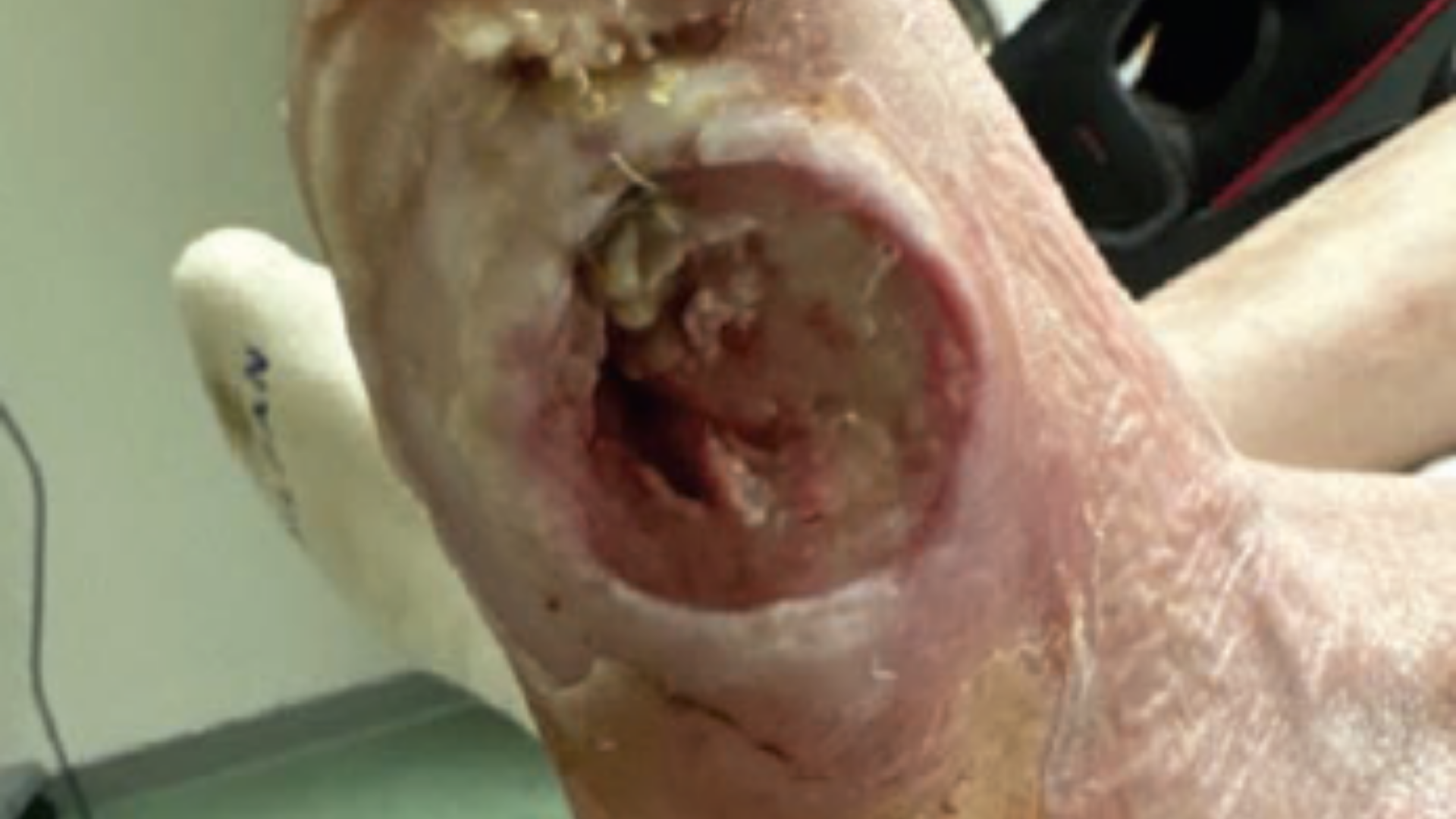
Pressure Injury–Associated Osteomyelitis: Why Diagnostic Accuracy Matters
September 17, 2026
Keywords
Categories
Understanding the burden of pressure injury–associated osteomyelitis—and the consequences of diagnostic uncertainty—is essential to improving patient outcomes, supporting antimicrobial stewardship, and coordinating multidisciplinary care.
Why This Matters
- Osteomyelitis is common among selected patients with advanced pressure injuries, particularly those with spinal cord injury, but reported frequency varies widely according to the population and diagnostic criteria studied.
- Clinical assessment, imaging, and microbiologic cultures each have important limitations, creating risks of both missed infection and overdiagnosis.
- Poor healing, recurrent interventions, antimicrobial exposure, hospitalization, and mortality underscore the need for multidisciplinary education focused on accurate evaluation.

Pressure Injuries Carry a Substantial Clinical and Economic Burden
Pressure injuries affect patients across acute care, long-term care, rehabilitation, and community settings. A Global Burden of Disease analysis estimated approximately 2.47 million new pressure ulcer cases worldwide in 2021, representing more than twice the absolute number recorded in 1990. Pressure ulcers were also associated with an estimated 37,033 deaths and 803,747 disability-adjusted life-years in 2021. North America had the highest regional age-standardized incidence rate, at 115.5 cases per 100,000 population.1
In the United States, the Wound Healing Society reports that approximately 2.5 million individuals experience pressure injuries, although this estimate is derived from acute care data and does not capture the full burden among people living at home or in nursing facilities. Hospital-acquired pressure injuries have been estimated to cost the US health care system $26.8 billion annually, with more than half of those costs attributed to stage 3 and stage 4 injuries.2
As tissue loss progresses, advanced pressure injuries may extend to muscle, fascia, and bone. This creates the conditions for contiguous infection, but proximity to or exposure of bone does not establish that osteomyelitis is present. That distinction is central to the clinical challenge.
How Common Is Osteomyelitis Beneath Pressure Injuries?
The frequency of osteomyelitis varies considerably by patient population, pressure injury severity, diagnostic method, and referral setting. In a 2024 systematic review and meta-analysis involving 492 individuals with spinal cord injury and pressure injuries, the pooled frequency of osteomyelitis was 43.0%. The estimate was 29.0% in the subgroup of US studies, and substantial heterogeneity was present across the included research.3
Certain surgical populations may have substantially higher rates. A 2022 retrospective cohort study included 117 patients with spinal cord injury or disorder and 130 grade 4 pressure injuries; histology identified osteomyelitis in 81% of patients.4 These findings do not apply to all patients with pressure injuries, but they illustrate how frequently wound care professionals may encounter suspected bone involvement in advanced disease.
A systematic review comparing diagnostic modalities with bone histology found reported osteomyelitis prevalence ranging from 17% to 86%, although most included studies reported prevalence near 20%.5 This variation is itself meaningful: estimates of disease burden depend heavily on who is evaluated and how infection is defined.
Diagnostic Uncertainty Can Alter the Entire Course of Care
Pressure-related bone changes may include fibrosis, reactive bone formation, marrow edema, and remodeling even when osteomyelitis is absent. Conversely, infection may extend beneath a wound without producing reliable systemic or local findings. Histopathologic examination of bone remains the diagnostic reference standard because it can distinguish inflammatory changes consistent with osteomyelitis from noninfectious changes caused by prolonged pressure.5,6
Available diagnostic approaches do not perform equally well. In the systematic review by Chicco and colleagues, clinical examination demonstrated sensitivities of only 22% to 33% and specificities of 60% to 79%. Reported sensitivity for plain radiography ranged from 18% to 68%, while computed tomography sensitivity ranged from 11% to 67%. In one larger included study, magnetic resonance imaging demonstrated 94% sensitivity but only 22% specificity compared with a composite reference standard.5
Microbiology introduces another layer of complexity. Pressure injuries are commonly colonized, and organisms recovered from superficial wounds may not represent microorganisms within bone. Across studies comparing bone cultures with histology, culture sensitivity ranged from 76% to 100%, but specificity ranged from 8% to 67%, potentially reflecting contamination and differences in sampling methods.5
No individual finding therefore resolves every case. The consequences of misclassification extend beyond diagnostic terminology: they may influence antimicrobial exposure, decisions about surgery and wound closure, length of stay, follow-up requirements, and the use of limited health care resources.
Patient Outcomes Demonstrate the Stakes
Although contemporary outcomes data remain limited, available cohorts show considerable morbidity. In a UK series of 35 patients with pressure ulcer–related pelvic osteomyelitis, 71% experienced treatment failure requiring additional surgery or intravenous antimicrobials. Only 36% achieved eventual ulcer healing, and 1-year mortality was 23%. Deep bone cultures identified polymicrobial infection in 87% of infection episodes.7
A larger 2023 study evaluated 415 patients with spinal cord injury who underwent surgery for presumed osteomyelitis associated with perineal pressure injuries. Multidrug-resistant organisms were identified in 20.7% of cases. Favorable outcomes were documented in 69.2% at 1 year, meaning that nearly one-third did not meet the study’s favorable-outcome definition. Among recorded failures, 110 involved dehiscence, 88 required additional surgery, 12 involved sepsis, and 8 resulted in infection-related death.8
These studies involve specific referral and surgical populations, and their results should not be interpreted as universal outcome rates. Nevertheless, they demonstrate that pressure injury–associated osteomyelitis can be associated with persistent wounds, repeated procedures, systemic infection, and death.
Variation in Practice Creates an Antimicrobial Stewardship Challenge
Diagnostic uncertainty is closely connected to antimicrobial use. In the 2022 grade 4 pressure injury cohort, antimicrobial durations ranged from fewer than 8 days to more than 91 days, and clinicians used 24 different antibiotics. Complications occurred across every treatment-duration group, and the study could not establish a conclusive relationship between duration and complication rates.4
A 2025 survey of 6 French referral centers similarly documented substantial variation in surgical practices, care pathways, and antimicrobial protocols. Reported antibiotic durations ranged from 5 to 180 days, despite self-reported 1-year cure rates of 70% to 90% across centers.9
Variation does not necessarily indicate that individual decisions are inappropriate; these patients often differ markedly in comorbidities, wound characteristics, surgical candidacy, goals of care, and access to support. However, the breadth of variation highlights the limited evidence available to clinicians and the importance of understanding what each diagnostic result can—and cannot—establish.
Why Multidisciplinary Education Matters
Pressure injury–associated osteomyelitis sits at the intersection of wound care, infectious diseases, radiology, microbiology, surgery, rehabilitation, nursing, nutrition, and antimicrobial stewardship. Each discipline contributes information that may change how the overall clinical picture is interpreted, yet recent reviews continue to emphasize the lack of high-quality comparative evidence and standardized approaches.6,9
For wound care professionals, the educational need is therefore not limited to recognizing osteomyelitis as a possible complication. It includes understanding disease frequency in high-risk populations, the limitations of diagnostic modalities, the difference between colonization and invasive infection, and the downstream consequences of diagnostic uncertainty. Education that brings these perspectives together can help clinicians engage more effectively in multidisciplinary decision-making while supporting the shared goals of diagnostic accuracy, responsible antimicrobial use, and improved patient outcomes.
References
- Lan X, Tang Y, Huang Z, et al. Global, regional, and national burden of pressure ulcers from 1990 to 2021 and projections over the next decade: results from the 2021 GBD Study. Wound Repair Regen. 2025;33:e70064. doi:10.1111/wrr.70064
- Gould LJ, Alderden J, Aslam R, et al. WHS guidelines for the treatment of pressure ulcers—2023 update. Wound Repair Regen. 2024;32(1):6-33. doi:10.1111/wrr.13130
- Jangholi E, Alizadeh SD, Farahbakhsh F, et al. The frequency of osteomyelitis after pressure injury in spinal cord injury: a systematic review and meta-analysis. Spinal Cord Ser Cases. 2024;10:72. doi:10.1038/s41394-024-00685-8
- Rigazzi J, Fähndrich C, Osinga R, et al. Osteomyelitis and antibiotic treatment in patients with grade IV pressure injury and spinal cord lesion—a retrospective cohort study. Spinal Cord. 2022;60(6):540-547. doi:10.1038/s41393-022-00758-1
- Chicco M, Singh P, Beitverda Y, Williams G, Hirji H, Rao GG. Diagnosing pelvic osteomyelitis in patients with pressure ulcers: a systematic review comparing bone histology with alternative diagnostic modalities. J Bone Jt Infect. 2020;6(1):21-32. doi:10.5194/jbji-6-21-2020
- El Zein S, Melin MM, Suh GA, Tran NV, Rose PS, Berbari EF. Evaluation and management of pelvic osteomyelitis in stage IV pressure injuries: a multidisciplinary collaborative approach. Clin Infect Dis. 2024;79(3):e11-e26. doi:10.1093/cid/ciae394
- Russell CD, Tsang STJ, Simpson AHRW, Sutherland RK. Outcomes, microbiology and antimicrobial usage in pressure ulcer-related pelvic osteomyelitis: messages for clinical practice. J Bone Jt Infect. 2020;5(2):67-75. doi:10.7150/jbji.41779
- Dinh A, D’Anglejan E, Leliepvre H, et al. Short antibiotic treatment duration for osteomyelitis complicating pressure ulcers: a quasi-experimental study. Open Forum Infect Dis. 2023;10(3):ofad088. doi:10.1093/ofid/ofad088
- Le Liepvre H, D’Anglejan E, Chaussard H, et al. Management of pressure injuries with associated osteomyelitis in people with spinal cord injury: a national survey of referral centers in France. Spinal Cord. 2025;63(6):319-322. doi:10.1038/s41393-025-01084-y
Photo courtesy of Bennett King, DPM, AACFAS, Elliott B. Perez, DPM, and Lawrence A. DiDomenico, DPM, FACFAS.
The views and opinions expressed in this content are solely those of the contributor, and do not represent the views of WoundSource, HMP Global, its affiliates, or subsidiary companies.


